How to Plan a Small Bedroom Layout (No Matter the Shape or Size)
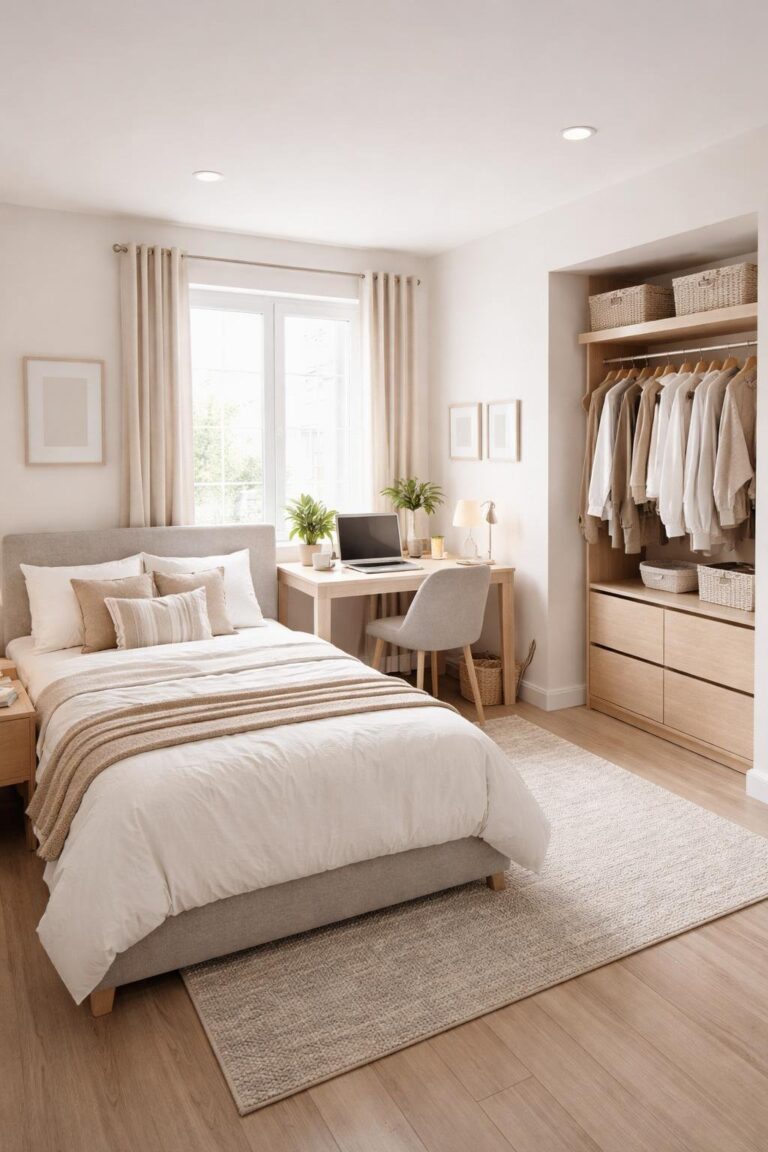
You can make a small bedroom feel roomy and useful by placing the bed, closet, and desk where they free up floor space and create clear zones for sleep, storage, and work. Put your bed against the longest wall or tuck it into a corner, keep closets vertical or use open storage, and fit a compact desk under a window or on a wall to save space and keep walkways clear.
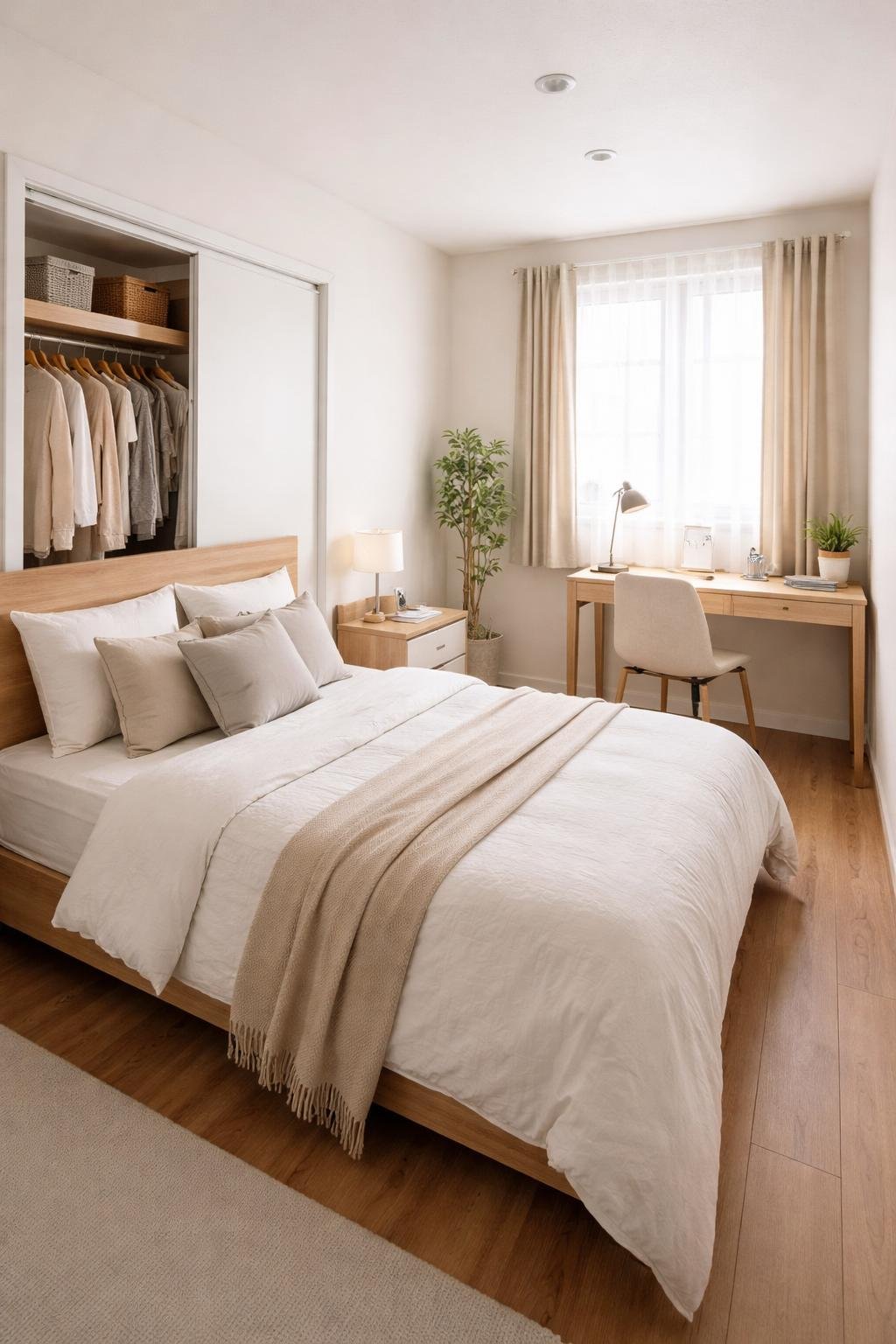
This post highlights simple layout choices and smart furniture moves that work for 8×8 to 12×12 rooms, whether you share the space, need a home office, or want more storage. You’ll find practical tips for bed placement, closet swaps, desk setups, and layout combos that help your small room do more with less.
Optimizing Bed Placement in Small Bedrooms

Where you put your bed changes how you move, store, and sleep. Aim for clear walkways, separated zones, and open wall space for storage or a desk.
Centering Versus Corner Placement
Centering a bed on the longest wall creates balance and makes it easy to access both sides. This works best if you have at least 30 inches of clearance on each side. Use a low-profile bed or wall-to-wall headboard and add matching nightstands or wall-mounted lamps without crowding the space.
Putting the bed in a corner saves floor space and opens up one side of the room for a desk, dresser, or seating. Push the long side or the head into the corner and leave a small gap for a slim nightstand or shelf. This setup works for couples who don’t need side access or single sleepers who want more open floor area. Try a daybed or corner platform to make the nook feel intentional.
Bed Against the Window Strategies
Placing the bed under a window can brighten the room and keep the longest wall free for storage. Anchor the bed with a low-profile headboard or let a window ledge act as a headboard. If the window sits low, use a short, narrow bed frame so you don’t block the light.
Layer window treatments for privacy and temperature control: blackout rollers for sleep and light curtains for daytime. Mount lights to the wall or ceiling to keep the window sill clear. For sloped or tiny windows, move the bed slightly off-center and use floating shelves above the head for storage without crowding the sill.
Choosing Low-Profile and Multifunctional Beds
Low-profile beds make a room feel taller and cut down on visual clutter. Pick a platform frame or a simple metal base to keep sightlines open. If you need wall space for art or hooks, go for a low-profile headboard or none at all.
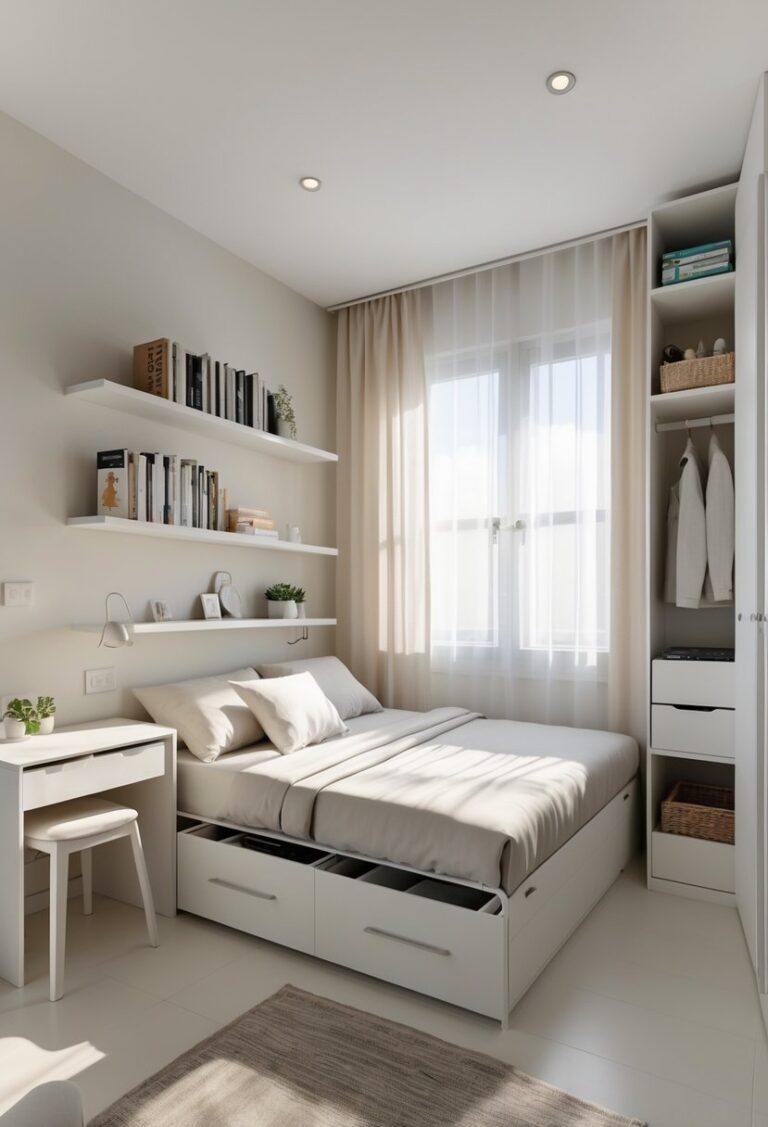
Multifunctional beds add storage and flexibility. Use a lofted bed or full loft bed to create workspace or closet area underneath. Storage platforms and beds with drawers free up closet space. For tiny rooms, try a Murphy bed or daybed with trundle so you can switch between sleeping and living modes easily.
Closet and Storage Solutions for Small Spaces

Make your small bedroom feel bigger by placing closets and storage where they won’t block light or foot traffic. Use built-in pieces, under-bed storage, and furniture that does double duty to keep things tidy and easy to reach.
Efficient Closet Placement and Design
Put the closet along a wall that doesn’t interrupt the main walking path. Place it near the entrance so you can grab outfits without crossing the sleeping area. Use a sliding barn door to save floor space and skip door-swing issues.
Inside the closet, mix hanging space with shelves and drawers. Put long hanging at one end and double rods for shirts and skirts on the other. Add a tall dresser or built-in shelving next to the closet opening to store folded clothes and accessories without using a separate dresser.
Use clear bins or labeled boxes on the top shelf for seasonal items. Install a narrow shoe rack at the bottom and hooks on the inside of the barn door or closet side for belts, scarves, and bags. Add good lighting and a full-length mirror on the inside of the door for quick dressing.
Utilizing Under-Bed and Vertical Storage
Under-bed storage turns unused space into a major asset. Choose a bed with storage drawers or use pull-out bins that slide easily on low-profile casters. Store out-of-season clothes, extra linens, or shoes in labeled containers so you don’t have to dig through everything.
Go vertical on walls to free up floor space. Mount shelving above the headboard or along unused wall sections. Use tall dressers instead of wide ones to keep a smaller footprint but more storage. Floating shelves and wall hooks work well for books, hats, and daily items.
Store rarely used items under the bed and keep everyday items on wall cubbies near the bed or desk. This keeps essentials within reach and bulky stuff out of sight.
Built-In and Multipurpose Storage Features
Built-in storage makes the most of every inch. Floor-to-ceiling cabinets or recessed shelving by the bed create a clean look and hide clutter. Use simple DIY or modular units to avoid a full remodel but still get more space.
Pick multifunctional furniture to cut down on pieces. A storage ottoman at the foot of the bed holds bedding and doubles as seating. A desk that works as a vanity saves surface area; add drawers or cubbies underneath for papers and makeup. Beds with storage compartments combine sleeping and storage in one piece.
Choose finishes that match the wall color to reduce visual clutter. Use minimal hardware and consistent baskets or boxes inside built-ins so the space looks tidy and cohesive.
Smart Desk and Workspace Ideas
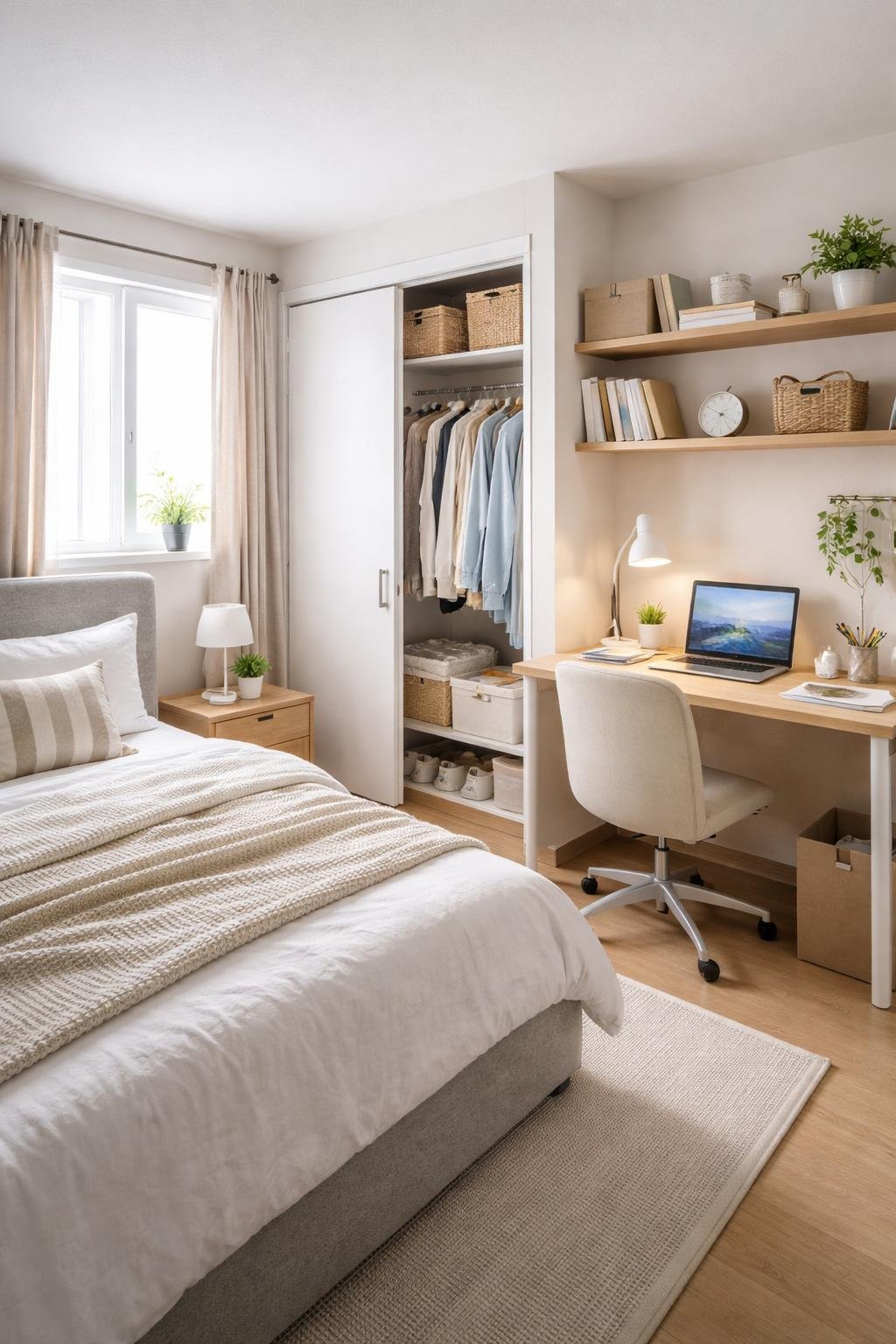
Put your workspace where you get natural light, keep sightlines to the bed open, and make storage easy to reach. Pick a desk type that fits your daily habits—standing work, laptop-only, or mixed-use—so you don’t waste space or create clutter.
Desk Placement Best Practices
Set your desk near a window to reduce eye strain and boost focus. Face the window or place the desk perpendicular to it to avoid glare. If you have little natural light, use a task lamp with adjustable color temperature.
Keep the desk at least 30–36 inches from the bed to create a visual boundary between work and sleep. Use a slim bookshelf or a floating nightstand as a divider if you want separation without taking up much floor space.
Arrange cords and power strips along baseboards or behind furniture. Mount a power strip under the desk to save surface area. Store daily items in a small set of drawers or a rolling cart so your work surface stays clear.
Corner and Floating Desk Solutions
Corner desks make the most of awkward angles in rooms under 10×10. Choose an L-shaped corner desk or a compact floating desk to free up floor space. Anchor the desk to two walls for stability and add shelves above for vertical storage.
Floating desks attach to the wall and free up floor space underneath for a basket or small chair. They work well as a writing surface or laptop station. Use a floating nightstand beside the bed instead of a bulky bedside table to keep the room airy.
If you need flexibility, try a folding desk that mounts to the wall and folds down when not needed. Pair it with a slim corner shelf and a wall-mounted TV above to save space and give guests a useful setup.
Lofted and Murphy Bed Workspaces
Put a desk under a lofted bed to create a compact office with clear separation from the sleep zone. Use a loft with built-in shelving and a desk surface so you don’t need extra furniture. Make sure you have 36 inches of headroom at the desk for comfortable seating.
A Murphy bed with a built-in desk folds up to reveal floor space during the day. Choose designs where the desk stays mounted so you don’t have to move things each time. Secure cables and use quick-release storage bins for fast transitions.
Make sure any loft or Murphy setup has good ventilation and lighting. Mount task lights to the underside of the bed or wall to keep the desk bright without using floor lamps.
Maximizing Space and Style with Layout Combinations
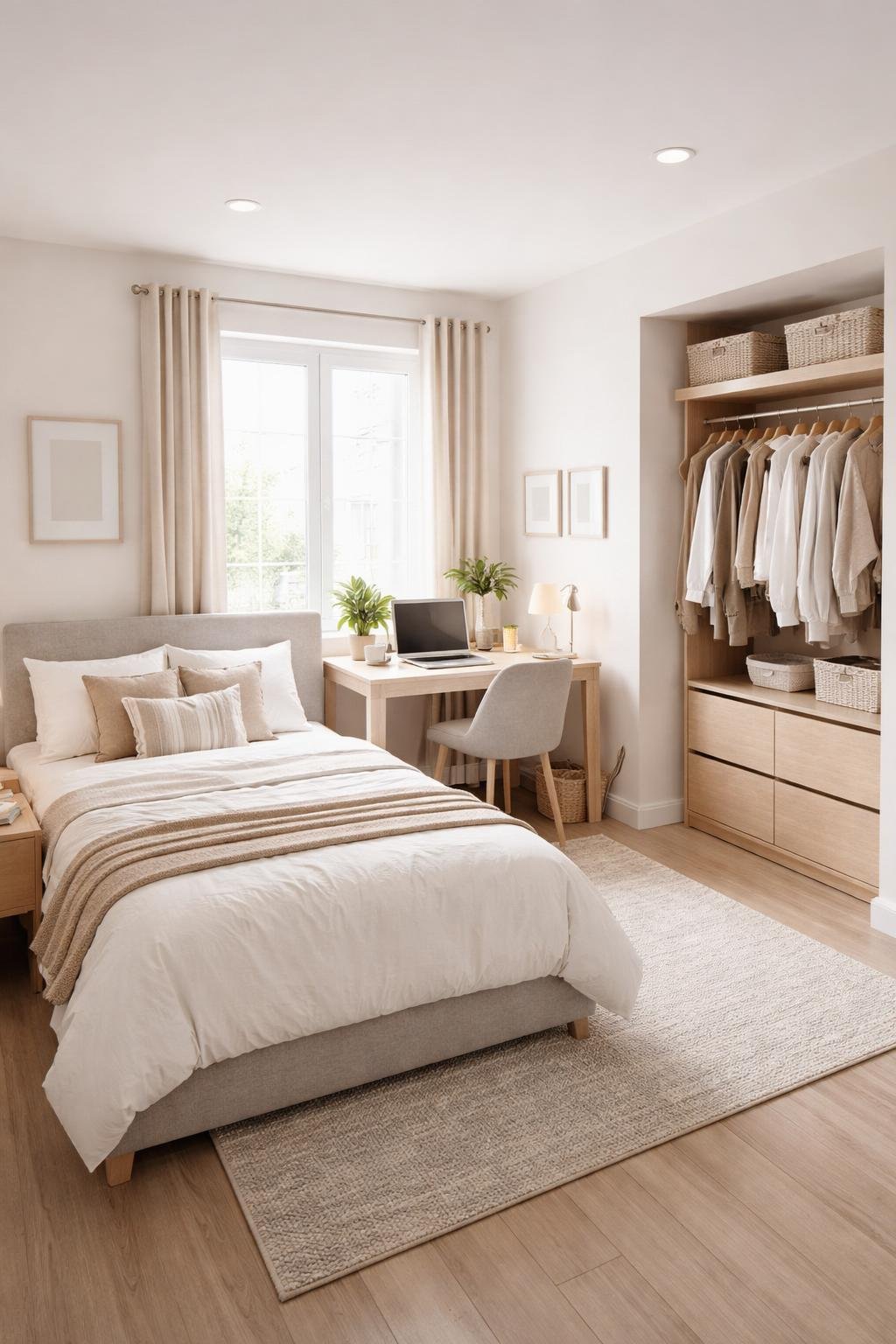
Combine smart furniture choices with clear zones to make your small bedroom feel bigger and more useful. Focus on pieces that do double duty and put them where they help you move easily through the room.
Integrated Furniture for Multifunctional Living
Pick multifunctional furniture that fits your room size. A bed with under-drawers or a platform with built-in storage replaces a bulky dresser and frees wall space for a closet or desk. Try a slim daybed if you need both seating and sleeping in one piece.
A desk that folds into a wall unit or a floating shelf with a pull-out surface gives you a work spot without losing floor area. For window seating, build a shallow bench with drawers underneath; this creates a cozy window seat and hidden storage for linens or clothes.
Use consistent heights and finishes so built-ins blend with the room. Match bed frame height to nearby storage to keep sightlines low and the room feeling open. Measure first and leave at least 24–30 inches of walk space around the bed where possible.
Zoning and Room Flow Techniques
Set up clear zones so every function has its own spot. Put the bed against the longest wall to define the sleeping area and keep paths to the door and closet simple. Place a slim desk near a window to take advantage of natural light and keep outlets open for charging devices.
Use rugs, lighting, and wall accents to separate areas without making the room feel crowded. A rug under the bed and a small pendant or wall sconce over a reading chair create a cozy nook. If you need closet space, tuck a shallow wardrobe into an alcove or line one wall with built-in cabinets to keep the room open.
Keep pathways at least 24 inches wide. Arrange furniture so you can easily move between the bed, closet, and door. This makes the room feel intentional and helps a window seating area fit in without feeling cramped.
Frequently Asked Questions
Here are straightforward tips you can use: where to put the bed, how to add a desk, smart storage ideas, and ways to fit two people or bigger items into a small room. Each answer gives you specific placement tips, key dimensions, and small tweaks that make a big difference.
What are the most effective ways to arrange furniture in a small bedroom?
Start with the bed—the biggest piece—placing it on the longest wall or in a corner to keep a clear walkway. Leave at least 24–30 inches of open space on one side for easy access.
Pick low-profile furniture and use slim nightstands or wall-mounted shelves to keep things feeling light. Float a narrow dresser or bench at the foot of the bed only if you still have 24 inches of clearance for walking and opening drawers.
Mount lighting on the wall or ceiling with sconces and track lights to free up surfaces. Choose multifunctional pieces like a storage bed or a bench with drawers to cut down on clutter.
How can I fit a desk into a small bedroom without compromising space?
Choose a compact desk, no deeper than 20 inches, and place it along a wall or under a window to keep the room open. Try a floating wall-mounted desk to save floor space.
Swap out a nightstand for a small writing table if you need both. Use shelves or pegboards above the desk to store supplies and keep the work surface clear.
A fold-down wall desk or a desk built into a Murphy bed works well in multipurpose rooms. Pick a chair that tucks fully under the desk to save even more space.
What strategies can optimize storage in a small bedroom layout?
Go vertical with floor-to-ceiling wardrobes, open shelving, or stacked units. Use clear bins or labeled baskets on high shelves so you can find things easily.
Pick a bed with built-in drawers or lift-up storage for seasonal items and linens. Use narrow dressers or a tallboy in tight spots instead of wide chests that block movement.
Turn awkward alcoves into closets or shelving, and hang organizers behind the door for shoes, accessories, or small items. Keep everyday items at eye level and store rarely used things higher up.
Where is the ideal location for a bed in a small bedroom to maximize space?
Put the bed on the longest wall to open up floor space and keep entryways clear. If the room is narrow, push the bed into a corner with one side open for more walking room.
If windows or heaters limit your options, center the bed on a wall so you can reach both sides. In attic or sloped-ceiling rooms, put the bed under the lowest slope to free up taller walls for storage.
How can I design a small bedroom to comfortably accommodate two people?
Pick the smallest mattress that still fits two people—usually a full or small queen—and make sure you have at least 24 inches of clearance on one side. Use two slim nightstands or wall-mounted shelves to save space.
Install built-in wardrobes or create a shared storage wall around the bed to cut down on extra furniture. Keep colors and decor calm and consistent to make the room feel bigger.
If space is super tight, try a Murphy bed, a lofted bed with seating or storage underneath, or a daybed that doubles as a sofa during the day.
What tips can help arrange a small bedroom that has large pieces of furniture?
Start by measuring your room and furniture so you know everything will fit and doors can open easily. Put the biggest piece along the longest wall to keep walkways clear.
Use lighter colors and lower-profile furniture nearby to balance out the heavier pieces. Try swapping out a bulky item for something multifunctional, like replacing a heavy dresser with a tall, narrow chest, to free up more floor space.