How to Design a Small Bedroom: Smart Tips for Space and Style
A small bedroom doesn’t have to feel cramped or uncomfortable. With the right approach, you can turn even the smallest sleeping space into a room that feels open and organized.
You can use smart furniture, creative storage solutions, and the right colors and lighting to make your space feel bigger. You don’t need expensive renovations to create a bedroom that works for you.
Focus on what you truly need and skip common mistakes. This guide walks you through measuring your space and adding those final decorative touches.
Key Takeaways
- Measure your room carefully and plan your furniture placement to maximize walking space and functionality.
- Use light colors, mirrors, and good lighting to make your bedroom look bigger and brighter.
- Choose multi-functional furniture with built-in storage and keep your space organized to prevent clutter.
Planning Your Small Bedroom Layout
Start by measuring your room before buying furniture. Where you put your bed and how you work around doors and windows will shape how your space feels.
Measuring and Assessing the Space
Use a tape measure to get your bedroom’s length, width, and ceiling height. Write down these numbers and mark the locations of outlets, switches, and vents.
Draw a simple floor plan on graph paper or use a free online room planner. Mark all windows, doors, and closets with their exact measurements and include the door swing direction.
Measure any features like radiators, alcoves, or slanted ceilings. These details affect what furniture fits and where you can put it. Leave at least 24 inches of clearance around the bed for easy movement. Pay attention to which walls get the most natural light.
Optimizing Bed Placement
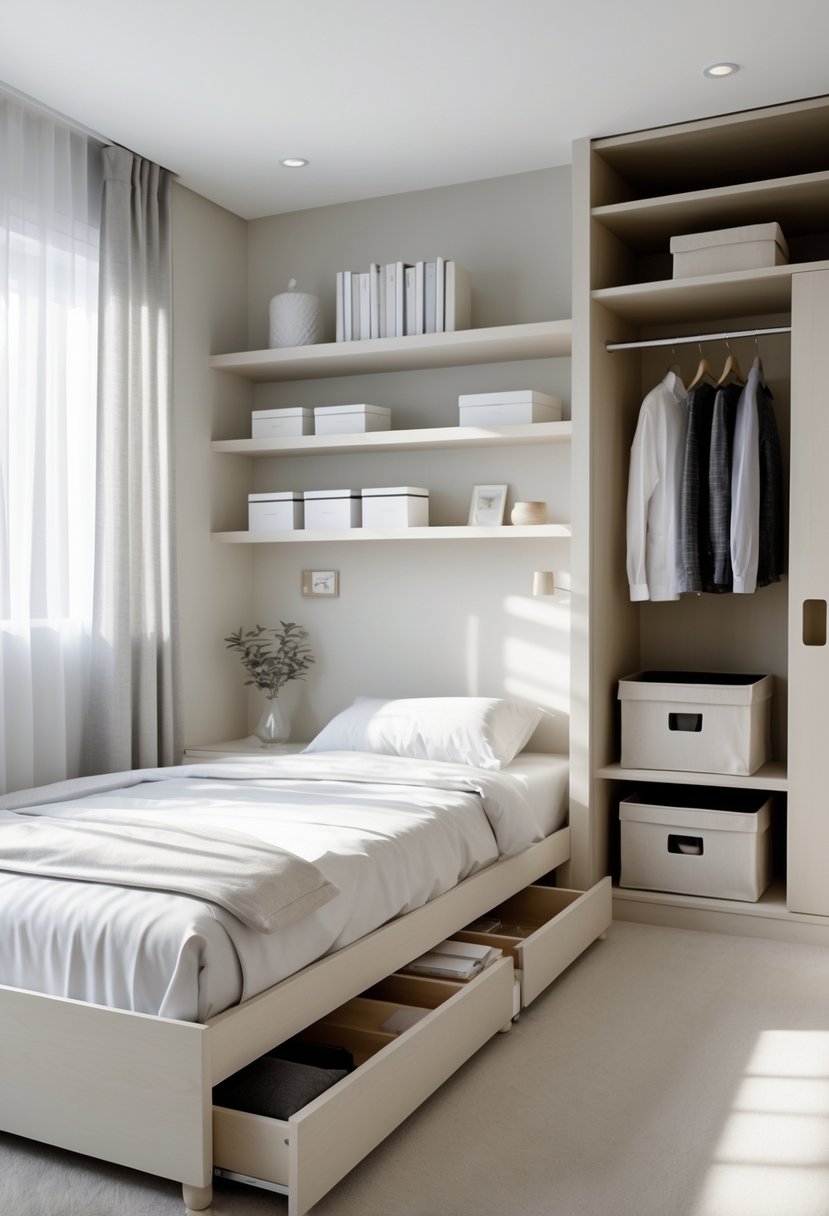
In most rectangular rooms, put your bed on the longest wall to free up floor space and improve traffic flow. You can also push the bed into a corner to open up more space.
In square rooms, center the bed on a solid wall and leave equal space on both sides for nightstands or walking paths. For narrow bedrooms, put the bed along a side wall instead of blocking the main walkway.
Try not to place your bed directly under a window unless you have no other option. If you do, the window ledge can double as a headboard. In rooms with even proportions, floating the bed in the center can create better flow.
Navigating Doorways and Windows
Keep at least 36 inches clear in front of your bedroom door so it can open fully. Place tall pieces like dressers away from the door’s swing path.
Position your bed so it doesn’t block window light. Natural light makes small spaces feel larger and brighter. Use the wall space between windows for nightstands or a small chair.
Make sure heating vents and radiators stay accessible. Blocking them can mess with heating and damage furniture. Arrange furniture so you can still open and close windows easily.
Choosing Space-Saving Furniture Solutions
The right furniture can turn a cramped bedroom into a cozy retreat. Beds that fold away, sit low to the ground, or have hidden storage help you reclaim valuable floor space.
Murphy and Loft Beds
A murphy bed folds into the wall or a cabinet when not in use, so you get your whole floor back during the day. Murphy beds work great in rooms that serve more than one purpose, like a guest room that doubles as an office.
Loft beds lift your sleeping area up and free up space underneath for a desk, seating, or storage. These work especially well in rooms with high ceilings.
Modern murphy beds often come with built-in shelving, desks, or sofas. Some have lighting and charging stations. Loft bed frames come in different heights, so you can pick one that fits your ceiling and comfort needs.
Daybeds and Low Bed Frames
A daybed doubles as a sofa and a bed, making it perfect for small bedrooms that need extra seating. Most daybeds sit against the wall and use pillows as backrests during the day. Many have pull-out trundles underneath for extra sleeping space.
Low bed frames without bulky headboards take up less visual space than traditional beds. Put a mattress on a simple frame and use pillows against the wall for a sleeping area that doesn’t dominate the room. Minimal designs work well in rooms with sloped ceilings or limited wall height.
Frames with slim profiles and clean lines help your bedroom feel less cluttered. Some low frames have built-in drawers for storage without adding height.
Multi-Functional and Built-In Pieces
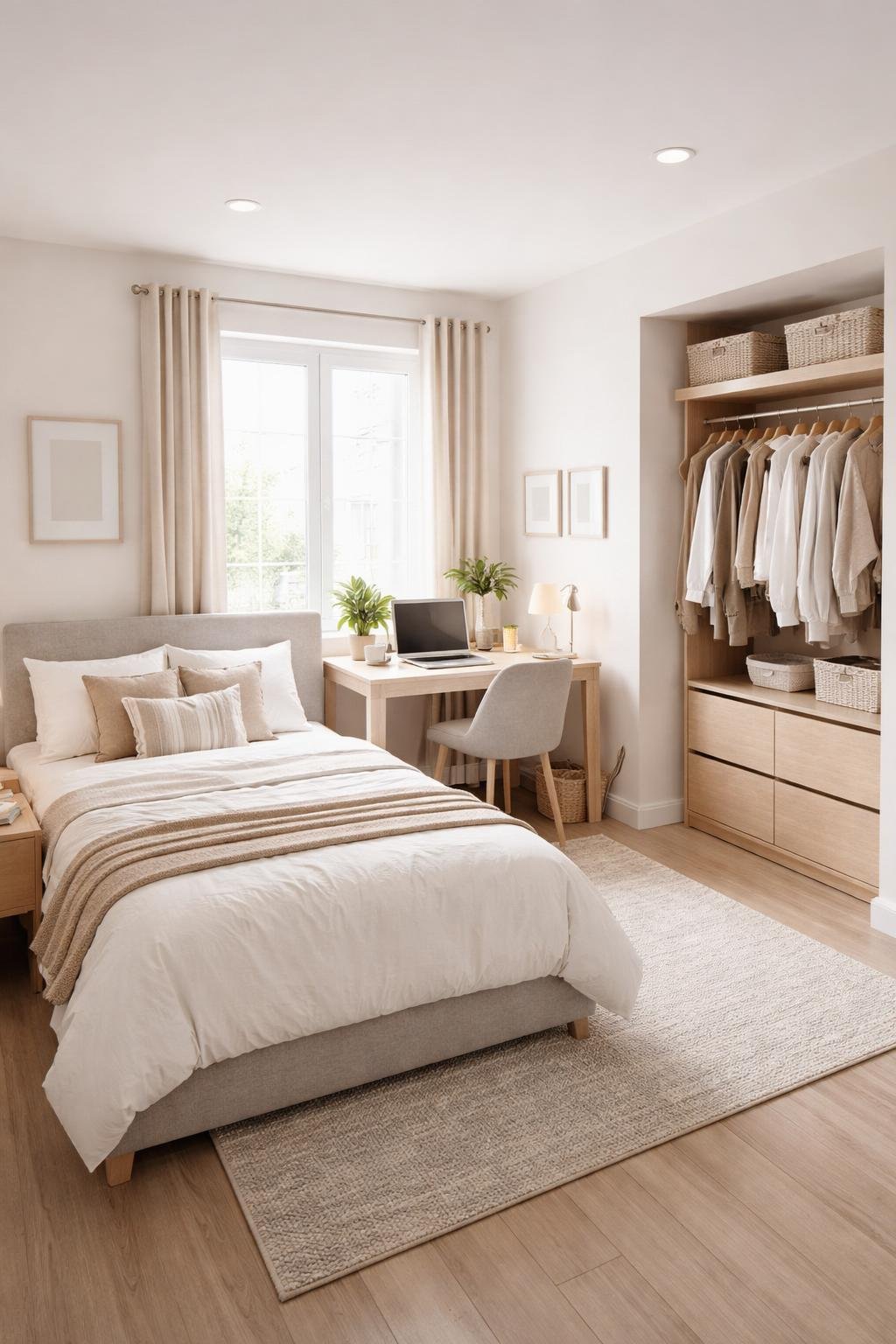
Furniture that does double duty saves space and money. Use a chest of drawers as a nightstand or TV stand. A narrow desk can work as a vanity or entry table.
Built-in storage makes the most of every inch. Add custom shelving around your bed, floating nightstands, or wall-mounted cabinets to keep things organized without using up floor space. Install shelves with rails that are just a few inches deep for books and small items.
Ottomans with hidden compartments and tables with drawers add storage where you might not expect it. Rolling carts can move between rooms and serve as a nightstand, bar cart, or extra workspace.
Storage Benches and Window Seats
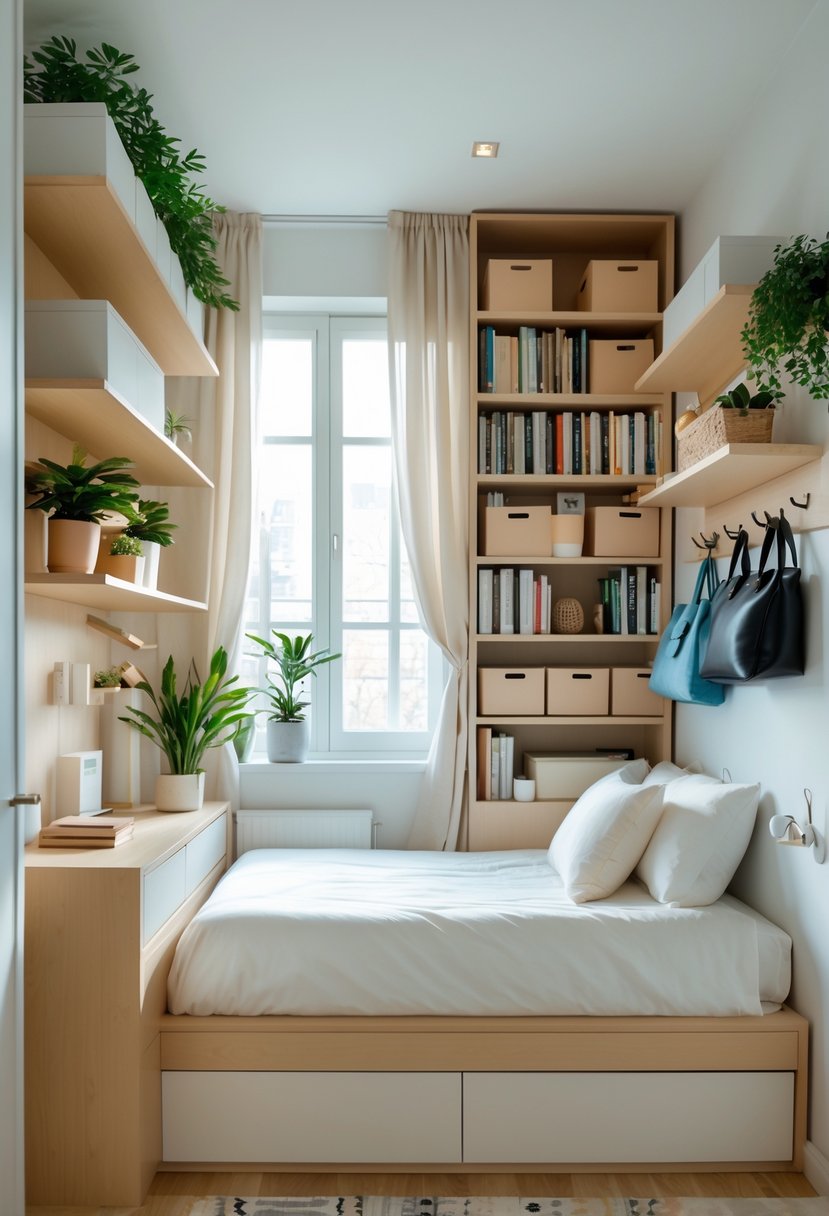
A storage bench gives you seating and hides shoes, linens, or seasonal clothes inside. Put one at the foot of your bed or against a wall for a handy drop zone. Benches with lift-up lids or drawers make it easy to grab what you need.
Window seats turn unused spots into cozy nooks with built-in storage below. Add a bench under a window for seating without using up awkward floor space. Drawers or cabinets underneath boost your storage even more.
Both options work well in corners or narrow walls where regular furniture won’t fit. Add cushions and pillows to make them comfy for daily use.
Maximizing Storage in a Small Bedroom
Good storage solutions turn cramped bedrooms into organized, functional spaces. Use vertical storage, custom built-ins, and hidden compartments to keep your stuff accessible and your floor clear.
Vertical and Floating Storage
Wall space is valuable storage that most small bedrooms ignore. Floating shelves give you display and storage space without using up the floor. They’re perfect for books, plants, and decor.
Put shelves above your bed, desk, or dresser for items you use often. Stack floating shelves at different heights to use more of the wall. A wall-mounted desk creates a workspace that folds away when you don’t need it.
Tall bookcases and floor-to-ceiling storage make your ceilings look higher. Wall-mounted cubbies work well as bedside storage instead of nightstands. For jewelry and accessories, narrow shelves with hooks underneath keep things handy and surfaces clear.
Built-In Shelves and Closets
Custom built-in storage fills awkward corners and alcoves that regular furniture can’t. Create a built-in look by placing tall wardrobe units against a wall and adding molding for a seamless finish.
Built-in closet systems with drawers, cubbies, and hanging bars store more clothes than just a rod and shelf. These setups adapt to your storage needs. A storage headboard gives you space behind your bed for books and charging stations, so you don’t need nightstands.
Window seats with flip-up storage hide blankets, linens, or out-of-season items. Built-in window benches also create cozy reading spots that do double duty.
Under-Bed and Wall-Mounted Options
The space under your bed is prime storage. Beds with built-in drawers replace the need for a dresser and keep clothes, shoes, or seasonal items organized and dust-free.
Rolling storage bins slide under standard bed frames for easy access. Store out-of-season clothes or extra bedding in zippered containers to keep them clean. Trundle-style drawers give you more structured storage than regular bins.
Wall-mounted nightstands keep your floor clear and make the room feel more open. These floating options hold lamps, phones, and books. Install swing-arm lamps on the wall to free up even more surface space.
Great wall-mounted storage ideas:
- Fold-down desks for small workspaces
- Magazine racks and file holders
- Jewelry organizers and accessory hooks
- Reading lights with built-in shelves
Color, Lighting, and Visual Tricks
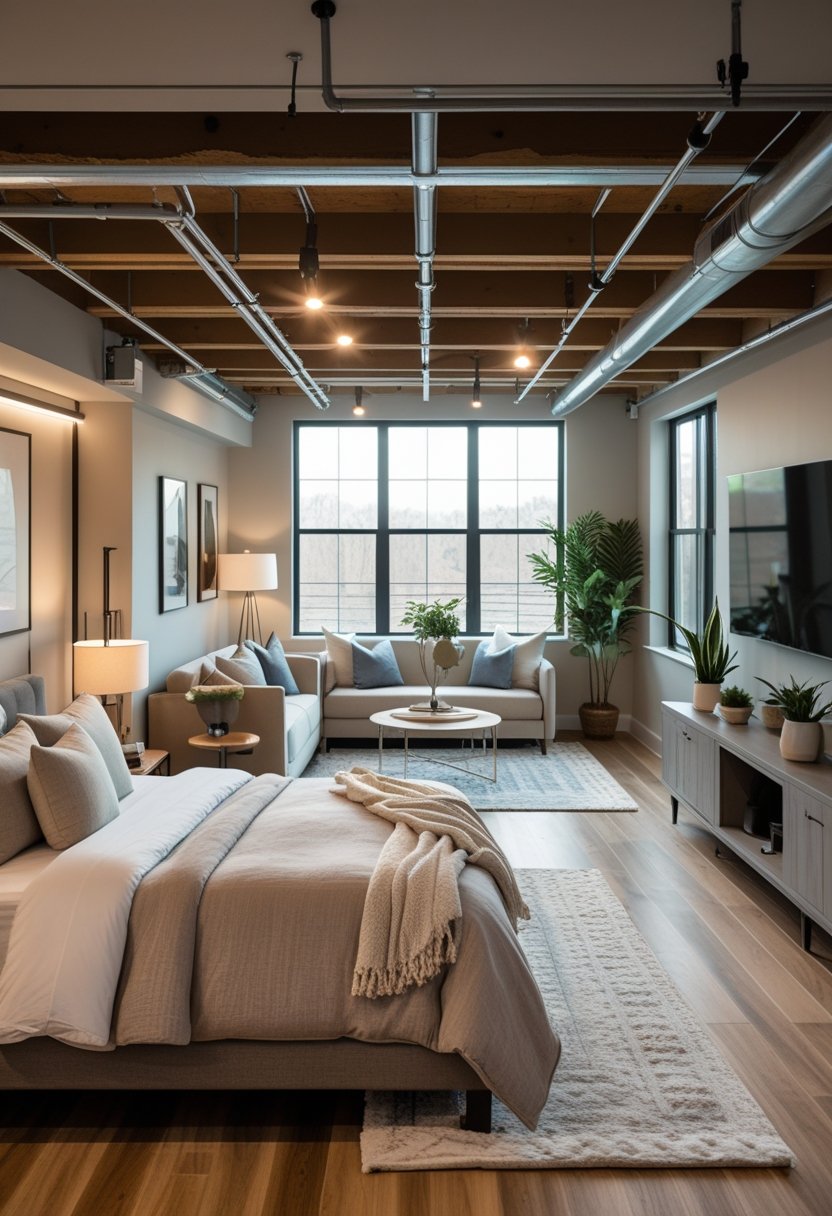
Light colors and smart lighting help small bedrooms feel bigger and more open. The right paint, window treatments, and layered lighting can turn a cramped room into a comfy retreat.
Neutral and Earth Tone Palettes
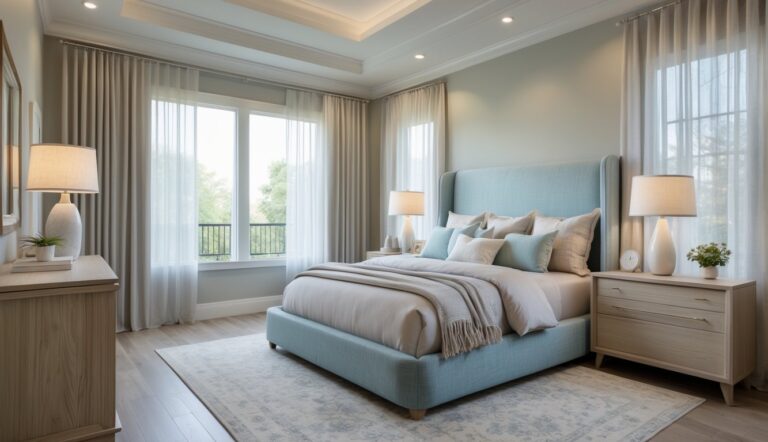
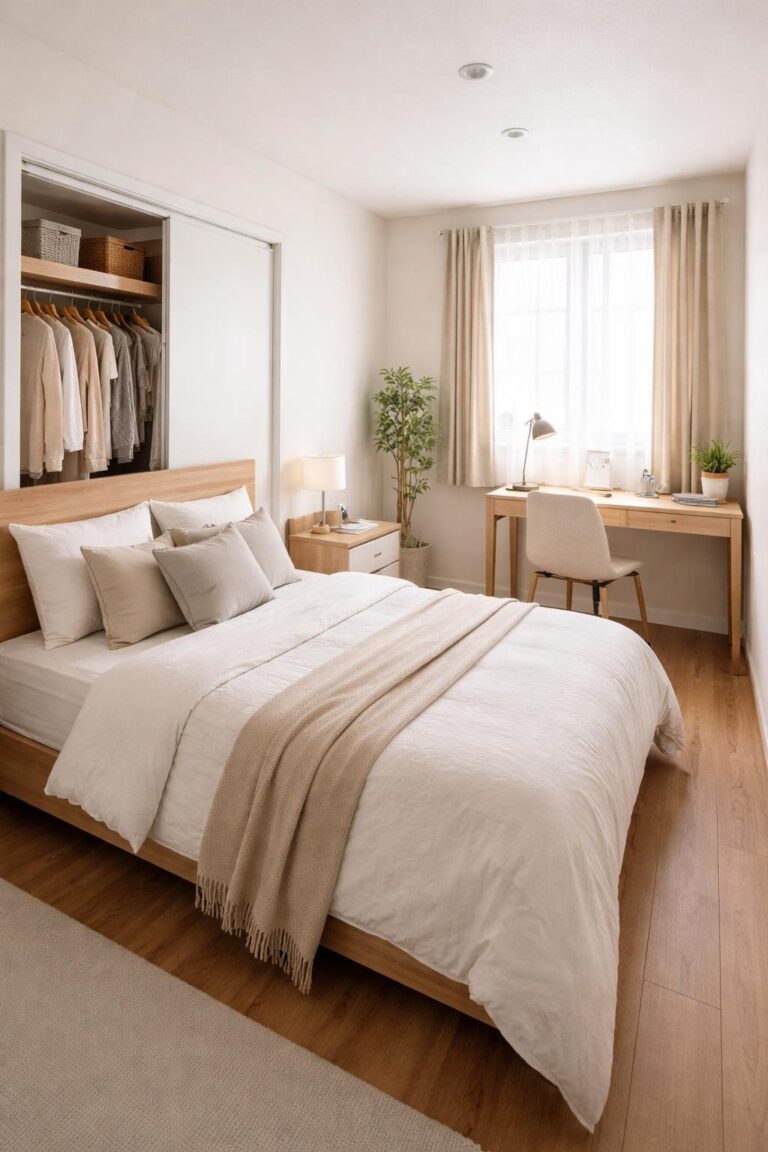
A neutral color palette is your best friend in a small space. White, cream, and light gray walls reflect light and make rooms look larger. Use white as an accent wall and pair it with dusty pastels for a soft, welcoming vibe.
Earth tones like beige, tan, and warm gray add warmth without closing in the space. These shades make the room feel cozy, not cramped.
Color drench is when you paint walls and ceilings the same color. This blurs the room’s boundaries and tricks the eye into seeing more space.
Try painting the lower half of your wall a darker shade and the upper half lighter. This adds vertical interest and makes ceilings look taller.
Accent Walls and Wallpaper
An accent wall adds personality without overwhelming your small bedroom.
Pick one wall to highlight with a different color or pattern, and keep the other walls neutral.
Accent wallpaper with subtle, receding patterns creates depth and texture.
Avoid bold, repeating patterns because they can make the space feel smaller.
Peel and stick wallpaper is an easy way to add visual interest without a big commitment.
Try extending wallpaper onto the ceiling for a unique look.
Bringing wallpaper from three-quarters up the wall and across the ceiling blurs the room’s dimensions, so the space feels larger.
Layered Lighting Strategies
Layered lighting mixes different light sources at various heights to create depth and ambiance.
Start with overhead lighting for general illumination, then add task lighting like bedside lamps for reading.
Use wall sconces or string lights to bring in ambient lighting and warmth.
Multiple light sources let you change the mood and help your small bedroom feel less confined.
Dimmer switches give you control over brightness throughout the day.
Soft, warm lighting in the evening makes the space feel cozy, while brighter light during the day keeps things fresh and open.
Maximizing Natural Light
Natural light opens up small bedrooms and makes them feel airy.
Semi-sheer curtains or light-colored curtains let daylight in while still keeping things private.
Hang floor-to-ceiling drapes high above the window frame to draw the eye upward.
This creates the illusion of taller ceilings and bigger windows, even if your windows are standard size.
Roman shades are a sleek alternative that don’t take up much visual space.
Pick light fabrics that filter sunlight during the day, and layer with blackout roller blinds for nighttime privacy.
Keep window treatments simple and skip heavy, dark fabrics since they absorb light and can make the room feel smaller.
Decorating and Personalizing Your Small Bedroom
Personal touches turn a small bedroom from just functional to truly inviting.
The right decor adds character while keeping things open with smart lighting, art, and soft textures.
Small Bedroom Decor Ideas
An accent wall creates a focal point without overwhelming your space.
Paint one wall in a bold color or apply peel-and-stick wallpaper behind your bed for impact.
Dark colors like black can create a cozy, cocooning effect in small spaces.
Bold patterns in a single color scheme add visual interest without clutter.
Mix patterns across wallpaper, bedding, and lampshades in coordinated tones.
Try a gallery wall on a side wall to shift attention away from tight quarters.
Hang photos or prints in varied sizes with matching frames, and leave some blank space for an airy feel.
Color approaches for small bedrooms:
- All-white palette for openness
- Earth tones for warmth
- Bright accent colors on trim or doors
- Two-tone paint to add dimension
Plants bring life to your room without taking up floor space.
Hang planters at different heights in corners or set small pots on windowsills.
Wall Sconces, Lamps, and Art Displays
Wall sconces free up nightstand space and work well in narrow rooms.
Mount adjustable sconces on side walls for reading, or above the bed for a headboard effect.
A bedside lamp adds warm task lighting.
Choose slim bases for small surfaces, and layer your lighting with overhead fixtures and accent lamps for flexibility.
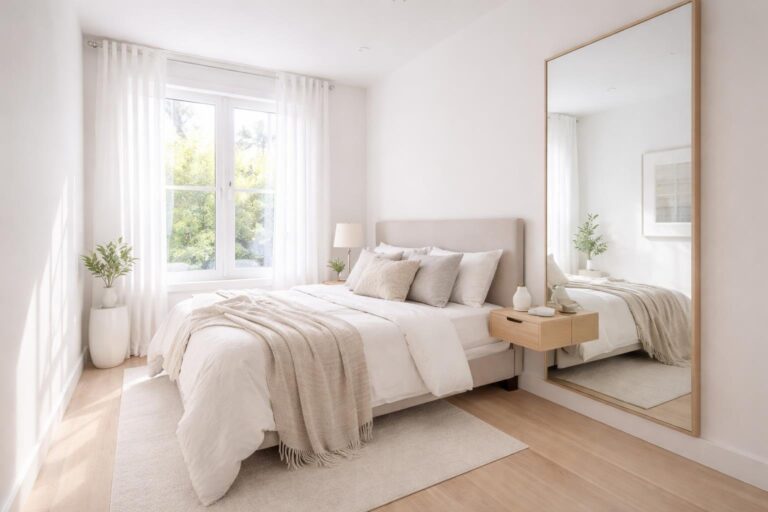
Hang a large mirror opposite a window to reflect light and make your room feel bigger.
Position art on the wall opposite your door to create an immediate focal point.
A statement chandelier or pendant light draws eyes upward and makes ceilings feel taller.
Paper globe pendants are great above floating beds.
Textiles and Cozy Finishing Touches
Layer bedding in different textures to add a touch of luxury.
Mix smooth cotton sheets with chunky knit throws, and pick patterns that match your walls.
Floor-to-ceiling curtains in blackout fabric block light and help with noise.
Velvet curtains add insulation, and bright curtain colors can energize a neutral room.
Throw pillows turn your bed into a comfy lounge spot.
Stick to three to five pillows to avoid clutter.
An area rug defines your sleeping zone and feels soft underfoot.
Choose low-pile rugs so the room doesn’t look crowded.
Maintenance, Organization, and Final Tips
Small bedrooms need regular upkeep to stay functional.
A weekly routine keeps clutter in check, and rearranging furniture helps you adapt as your needs change.
Decluttering Regularly
Set aside time each week to go through your bedroom and remove things that don’t belong.
This keeps small spaces from feeling cramped.
Focus on high-clutter areas first:
- Nightstand surfaces – Keep only three essentials on top
- Dresser tops – Clear off receipts, empty packages, and items that belong elsewhere
- Floor space – Pick up clothing and put away shoes daily
- Under the bed – Check storage boxes monthly and remove things you don’t need
A decluttering routine helps you stay ahead of mess before it piles up.
Small rooms get disorganized quickly, so frequent maintenance is more effective than big cleaning sessions.
Sort your stuff into three groups: keep, donate, and trash.
Be honest about what you use—if you haven’t worn something in six months, let it go to free up space.
Flexible Layout Adjustments
Your bedroom layout doesn’t need to be permanent.
Move furniture around every few months to see what works best for you right now.
Try different bed positions to create more usable floor space.
Push your bed into a corner for a daybed vibe, or put it in front of a window if that opens up space for other furniture.
Layout changes to try:
- Swap your dresser and nightstand
- Move your bed to a different wall
- Relocate a chair or desk to another corner
- Add or remove pieces based on what you actually use
Make sure you can walk around your room without bumping into things.
If you’re always squeezing past furniture, something needs to move.
Measure your space before making changes so you know what fits where before moving heavy pieces.
Frequently Asked Questions
Small bedrooms need careful furniture choices, smart lighting, and strategic color to feel comfortable and spacious.
Good storage and minimal decor help keep these compact spaces organized and functional.
What are the best furniture pieces to include in a small bedroom to maximize space?
Your bed should be the main focus, so pick the right size.
A queen-size bed works for couples, while a single or twin bed is great for one person.
Platform beds with built-in storage drawers give you extra space for clothes or bedding underneath.
Murphy beds that fold into the wall save even more floor space when you’re not sleeping.
Stick to minimal, essential furniture.
Use a compact wardrobe with mirror doors instead of a bulky dresser.
Wall-mounted desks or dressing tables free up floor space and make the room feel bigger.
A bedside shelf often works better than a full nightstand in tight spaces.
Choose foldable or stackable chairs if you need extra seating.
Multi-functional pieces help you get more use from less furniture.
How can lighting be optimized in a small bedroom to create a sense of space?
Good lighting makes your small bedroom look bigger and more inviting.
Start with a bright ceiling light for overall illumination.
Add wall-mounted lights or sconces near your bed for reading and evening tasks.
A small lamp on your side table provides soft, warm light when you don’t need the whole room lit.
Natural light is your best tool for opening up the space.
Use light-colored curtains or sheer fabric to let sunlight in during the day.
Avoid heavy or dark curtains that block light and make your room feel smaller.
Keep window treatments simple and minimal.
Layer your lighting with different sources at different heights to create depth and make the room feel bigger.
What color schemes work best to visually expand a small bedroom?
Light and neutral colors make your small bedroom look bigger and brighter.
White, light grey, and soft beige work great for walls.
Pastel shades like soft blue, green, or peach also help create an airy feel.
These colors reflect more light than dark ones.
Painting your ceiling and walls in the same color or similar shades creates a seamless look that feels open.
This removes visual breaks that can make a room feel choppy.
You can still use darker colors if you love them, but keep them to just one accent wall.
Covering all walls in dark shades will make your bedroom feel closed in.
Stick to one color palette throughout the room to avoid a cluttered look.
Too many different colors in a small space create visual noise.
How can storage be maximized in a small bedroom layout?
Under-bed storage is one of the easiest ways to add space for your stuff.
Use drawers or boxes to stash clothes, shoes, or extra bedding.
Vertical storage makes use of wall space you might otherwise ignore.
Install floating shelves for books, decor, or essentials you want within reach.
Pick a tall wardrobe that goes up to the ceiling instead of a short one.
This gives you much more storage in the same floor space.
Hang hooks or racks behind your door for bags, jackets, or clothes.
This turns dead space into useful storage.
Use organizers inside your drawers and closets to keep things neat and easy to find.
Small bins and dividers stop things from getting messy and taking up too much space.
What are effective strategies for decorating small bedrooms without cluttering them?
Keep your decor simple and intentional.
Hang one or two pieces of wall art instead of covering every surface.
Add throw pillows or a textured bedspread to style your bed without taking up extra space.
These small touches add personality without clutter.
Use one small indoor plant to add freshness and life to your room.
Plants bring nature inside without needing much floor space.
A large mirror on the wall or mirrored wardrobe doors reflect light and make your room feel bigger.
Placing a mirror opposite a window doubles the natural light in your space.
Stick to your chosen color palette and style throughout the room.
Mixing too many different looks creates visual chaos in a small area.
Can you suggest some multi-functional furniture ideas for a small bedroom?
A bed with built-in storage drawers underneath gives you a place to sleep and extra storage space. You won’t need a separate dresser.
Ottoman benches at the foot of your bed offer both seating and hidden storage. Store blankets, pillows, or off-season clothes inside.
Wall-mounted fold-down desks create a workspace when you need it. Fold them away to save space when you’re done.
Nightstands with shelves or drawers give you storage and a spot for your lamp and phone. Pick ones that fit your room size.
Wardrobes with built-in mirror doors add storage and make your room feel bigger. You get a full-length mirror without needing extra space.